
1
First assessment.
We review prescription, ocular health, visual needs (study, sport, work) and discuss expectations. We clearly explain what Ortho-K can and cannot offer.
Fitting Ortho-K lenses is not the same as buying ordinary contacts. It is a structured clinical process with specific tests and ongoing follow-up to ensure safety and effectiveness.
Review of prescription, ocular health, visual needs and habits.
Detailed map of the cornea, tear film and ocular surface.
Rigid gas-permeable lens with the right geometry for each eye.
How to insert, remove and clean the lenses safely.
Check of visual response, comfort and adaptation; small tweaks if needed.
Daytime vision settles over the first few weeks.
Check-ups to ensure safety, effectiveness, hygiene and progress.
We review prescription, ocular health, visual needs (study, sport, work) and discuss expectations. We clearly explain what Ortho-K can and cannot offer.
Topography draws a detailed map of the cornea (curvature, regularity). It's the key test to know whether the eye is suitable and to design the lens correctly. The tear film and ocular surface are also assessed.
Based on the data, a rigid gas-permeable lens is selected or custom-designed with the right geometry for each eye.
Before taking them home, you're taught how to insert, remove and clean the lenses correctly. Hygiene is absolutely essential.
The next morning we assess visual response, comfort, lens fit and corneal health. Small adjustments in the first days are common.
Over the first weeks daytime vision stabilises. Some people notice changes from the first night; in others the effect is gradual.
Check-ups continue over time (frequency set by the professional) to monitor corneal health, visual quality and hygiene. Any warning sign —pain, red eye, blurred vision— requires immediate consultation.
The imaging test that maps the shape of the cornea. It identifies irregularities, evaluates symmetry and guides lens geometry. No serious Ortho-K fitting is done without topography.
Parameters such as base curvature, diameter, optical zone, relief curves and power are adjusted. The balance between all these parameters determines fit, comfort and optical outcome.
Tears act as the interface between lens and cornea. Poor-quality tears can limit tolerance and effectiveness. In some cases the ocular surface should be treated first.
The effect gradually disappears once you stop wearing the lenses. This makes Ortho-K a very useful option for growth stages and for people who want to try before considering surgery.
Serious complications are rare when guidelines are followed: hand washing, cleaning with recommended products, no tap water in contact with lenses, respecting wear hours, not sleeping longer than recommended and attending check-ups. In case of pain, red eye or vision loss, remove the lens and consult immediately.
Ortho-K modifies the corneal surface night after night. Regular professional monitoring is what ensures this interaction remains safe and effective over time.
What orthokeratology (Ortho-K) is, how overnight lenses work, their effect on the cornea, and how they differ from daytime lenses or surgery.
→Indicative Ortho-K cost in Barcelona: €200 assessment, €290-360 per lens, with follow-up reviews and adjustments included.
→Clear answers to the most common questions about Ortho-K, overnight lenses and myopia control in Barcelona.
→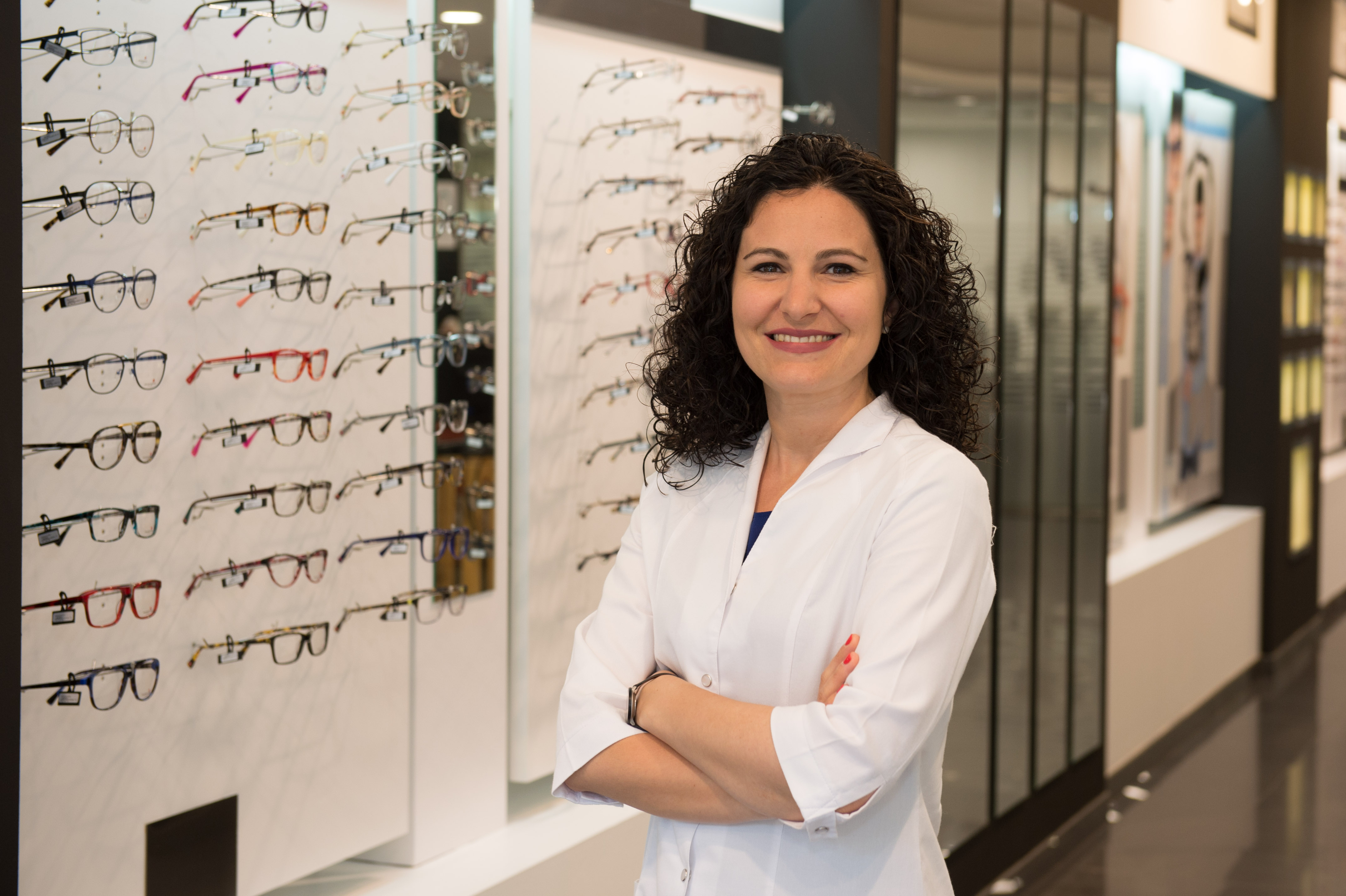
Content reviewed by Elena Sentís, optometrist (registration no. 18568) and technical director of Looptica Poblenou. Specialist in advanced contact-lens fitting, Ortho-K and myopia control.